Travel Experiences US Residents
USA
Foundation

Life at a Camp in the USA

Every summer, more than 7 million children attend one of over 12,000 summer camps across the United States. Camps provide structured environments where children grow socially, emotionally, intellectually, and morally, while living and playing alongside positive role models.

As an International Cooperator, it is important for you to understand what daily life at camp looks like so that you can set accurate expectations with the participants you recruit. Camp staff have an incredible opportunity to make a positive impact on children’s lives, but they also face long days, communal living, and strict policies that must be respected.

Every camp has its own philosophy, rules, traditions, and camper community. No two camps will be the same. Encourage participants to research their camp in advance by reviewing the camp’s website or reaching out to their employer with questions.

Here are some common areas where policies may differ:

Smoking

  • Many camps are completely smoke-free.
  • Some allow smoking only in designated areas and at specific times.
  • Participants who violate smoking rules risk being dismissed from the program and sent home at their own expense.

Time Off

  • Most camps offer one 12- to 24-hour break per week.
  • The timing varies: some camps provide evening-to-evening time off, others morning-to-evening.
  • Some camps also allow short daily breaks (e.g., one hour).
  • International staff must understand that working at an overnight camp is a 24/7 environment and the job is demanding.

Sleeping Arrangements

  • Housing varies: staff may live in tents, cabins, or dormitories.
  • Bathing facilities may be centralized or located in cabins.
  • Participants should be prepared for communal living and limited privacy.

Dress Code & Personal Appearance

  • Camps require clothing appropriate for working with children.
  • Rules on tattoos, piercings, hair length, and facial hair vary widely.
  • Swimwear must be modest and functional.
  • Hygiene and cleanliness are emphasized for health and safety in community living.

Communication with InterExchange

  • Participants are required to check in with InterExchange at least every 30 days while on their program.
  • Cooperators should remind them that this is a mandatory part of program compliance.
  • Most camps prohibit staff from taking or sharing photos of campers due to privacy rules. Staff may only share appropriate photos of themselves, camp scenery, or their travels.

Key Points for International Cooperators

  • Be honest with participants: life at camp is rewarding but physically and emotionally demanding.
  • Prepare participants for long hours, communal living, and strict rules.
  • Stress the importance of respecting camp policies (smoking, dress code, photo restrictions, etc.).
  • Remind participants that they represent InterExchange, their home country, and themselves while at camp.
  • Encourage them to view camp life as an opportunity to learn resilience, teamwork, and leadership skills.

Teamwork and Guidance at Camp

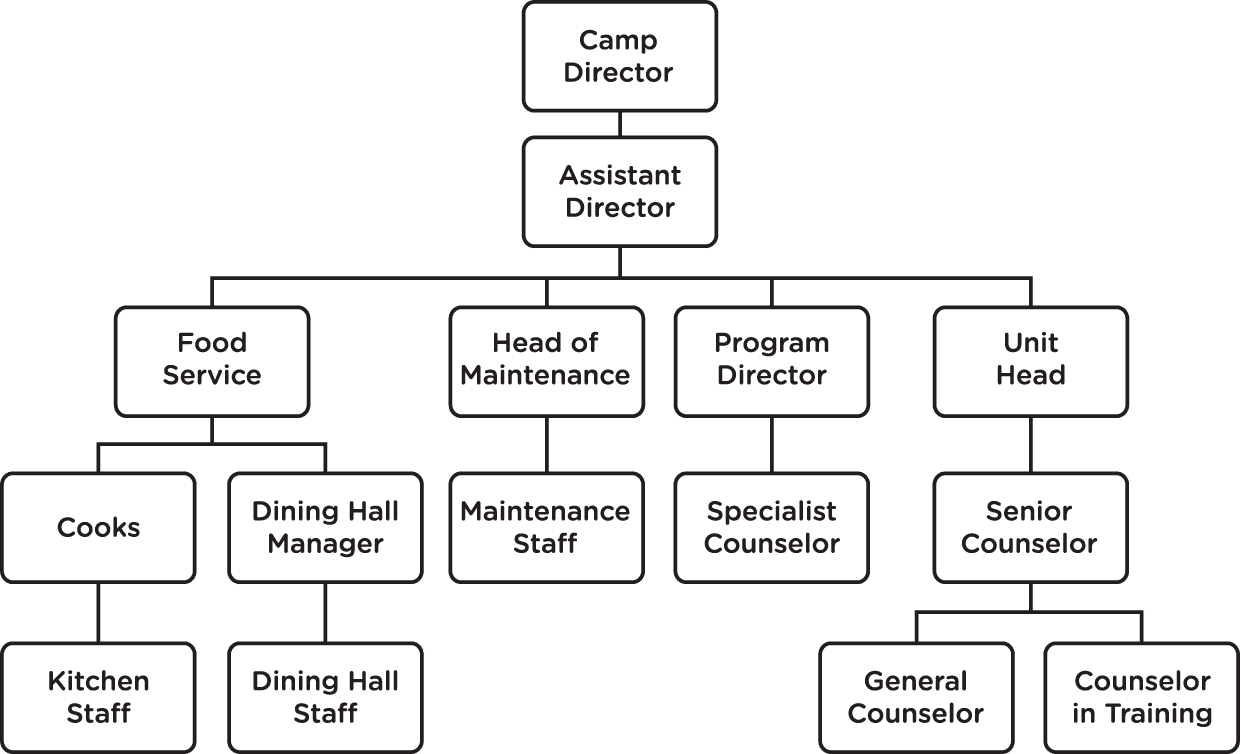
It is important to prepare participants for the fact that camp is a team effort. No single staff member can run camp on their own — every counselor will need support at some point. Supervisors play a key role in guiding staff on how to contribute effectively within their roles. Please remind participants that:
  • They should expect to receive instructions and responsibilities from their supervisors.
  • If they are ever unsure about a task, find it too difficult, or simply have questions, they should ask their supervisor for help.
  • Supervisors are there to provide advice, guidance, and assistance to ensure each staff member has a successful summer.
By setting this expectation in advance, you help participants understand that asking questions and seeking guidance is a normal and encouraged part of camp culture. This will ease adjustment and support a smoother experience for both the counselor and the camp.

Participants placed through Camp USA generally serve as counselors, which is one of the most essential roles in ensuring camp runs smoothly and effectively. As a cooperator, it is important to help prospective participants understand the expectations of these roles before they arrive in the U.S.

General Counselor

General counselors are the staff members most directly involved with a group of campers. They live in the same cabin or tent, eat meals with campers, and accompany them to daily activities. This constant presence means they quickly become role models, mentors, and caregivers for their campers.

Key points to emphasize to participants:

  • Campers do not have their parents or teachers at camp, so they will look to counselors for guidance.
  • Everything a counselor does — their words, actions, and attitude — will strongly influence their campers.
  • Counselors must show enthusiasm and maintain a positive attitude. If they are disengaged, campers will mirror that behavior.
  • Energy, patience, and adaptability are essential qualities for success in this role.

Activities Counselor

Activities counselors are responsible for planning, organizing, and teaching specific activity areas (such as sports, arts & crafts, music, swimming, or outdoor skills). These counselors spend much of their time in their specialty area, working with different camper groups throughout the day.

Some camps employ counselors only in their activity specialty, while others combine activity responsibilities with general counselor duties. Cooperators should prepare participants to be flexible in how their role is structured.

Tips to share with participants:

  • Practice their specialty before leaving for camp so they feel prepared to teach it.
  • Bring resources (songs, games, activities, ideas) that can be adapted for children of different ages and skill levels.
  • Clarify with camp what materials, time, and budget are available for running activities.
  • Encourage participants to learn key English vocabulary related to their activity area to improve communication with campers.