I knew that the first few months in my role as Women’s Livelihoods Specialist for SEED Madagascar’s Project Mahampy would be largely research-oriented. Project Mahampy started in early 2019 and aims to improve the livelihood of traditional female reed weavers in southeast Madagascar through a reedbed conservation plan, integrated market and social research, and the creation of a Weaver’s Cooperative.
I embarked on my research knowing that economic and social elements of mahampy weaving would provide direction for the project, and was eager to get started as soon as I arrived to Fort Dauphin (a city in southeast Madagascar) in June 2019.
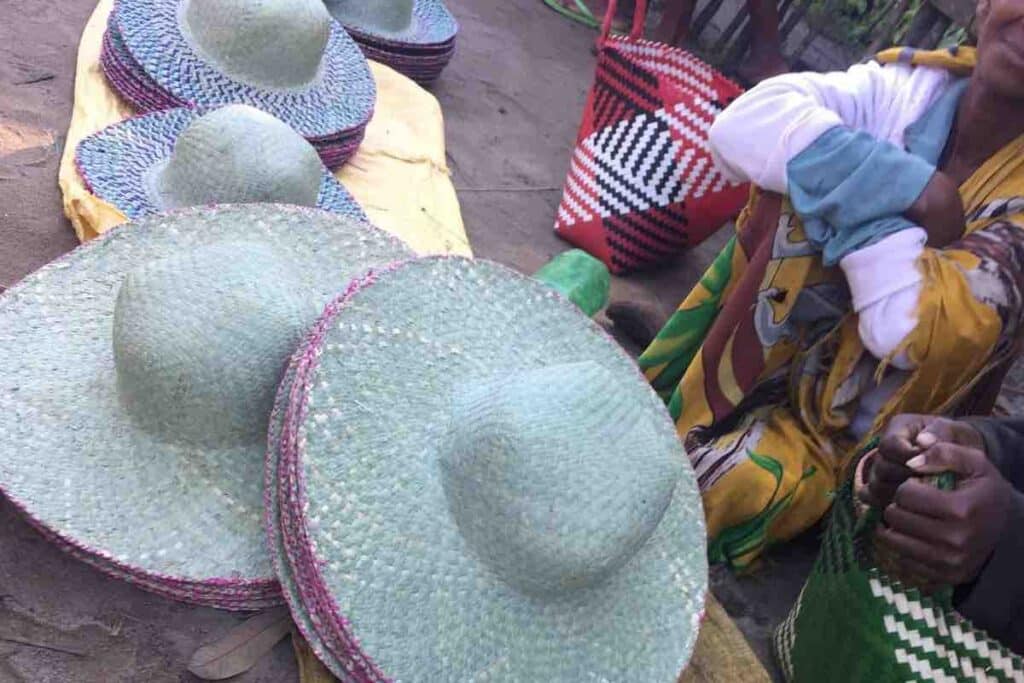
Image courtesy of Maggie Poulos.
Mahampy, a locally sourced reed, is closely tied to Malagsy cultural and spiritual beliefs, and the weaving of traditional products with this reed provides vital supplementary income for many households.
Weaving a mahampy mat is a multi-step process. First, the reeds need to be harvested from reedbeds (usually far from home). After a few hours, a large bundle of reeds will be brought home for coating in white clay, which is important for maintaining the color and quality of the reeds. The reeds are then laid out in the sun for three to four days. Then the reeds are flattened using a kalu, a large wooden tool similar to a mortar and pestle. After nearly five days of care, the reeds are finally ready for weaving. It usually takes a full day of weaving to make one mat. Quite the process!
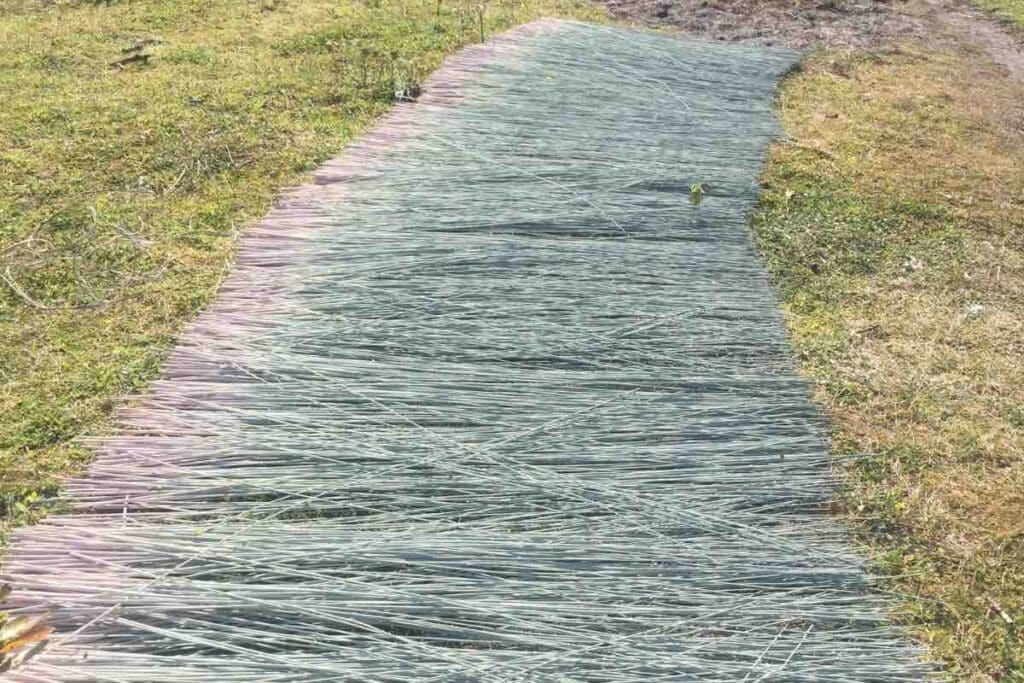
Image courtesy of Maggie Poulos.
“I need it in death as well as in life.” This local saying captures how mahampy is used on a daily basis, but also its religious role. Women weave mahampy mats, baskets, hats, and purses that are sold at markets or from their homes, but mahampy mats are widely known as the most important aspect of a funeral. The body of the dead is wrapped in a mahampy mat—it cannot be anything different—before being placed in a grave.
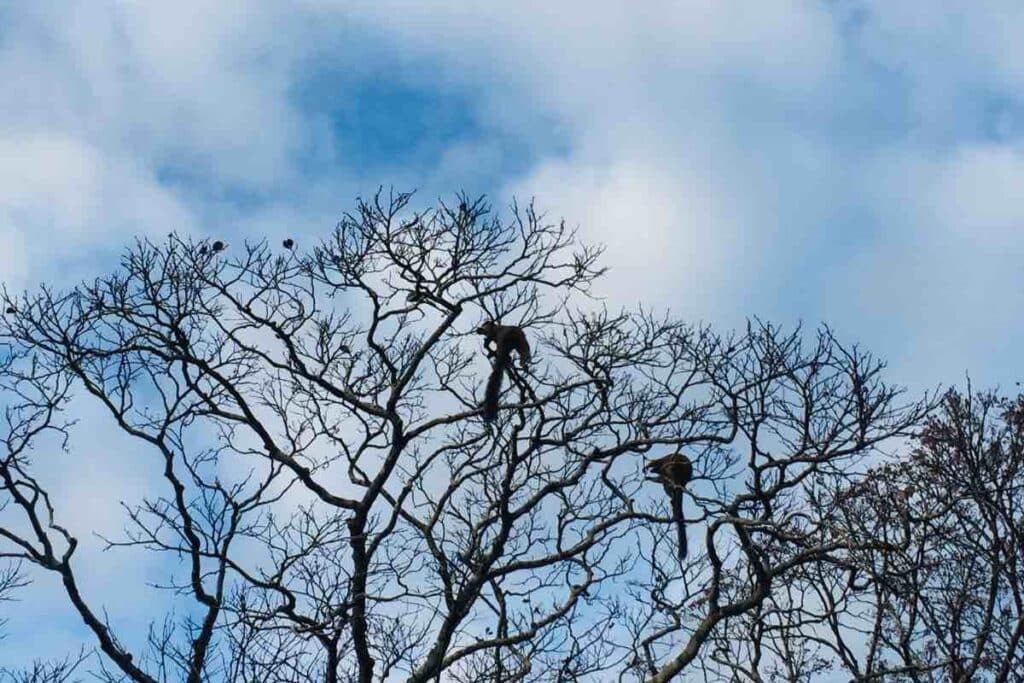
Image courtesy of Maggie Poulos.
What I find most interesting is that the weaving of mahampy and its use in ritual is a form of cultural knowledge that is passed down from the ancestors. Zanahary, son of the creator, gave mahampy to humans. Mahampy will always play a role in the lives of those living in the community of Sainte Luce, making it the perfect focal point of a cooperative with both economic and social potential.
In November, Project Mahampy prepared to build and facilitate the cooperative based on the research we conducted over two months. I feel ready to integrate all that we’ve learned into making the cooperative as strong and capable as possible. It’s an exciting time for the project and for myself—having been here for four months, I feel as if I truly do live here.
More to come soon!