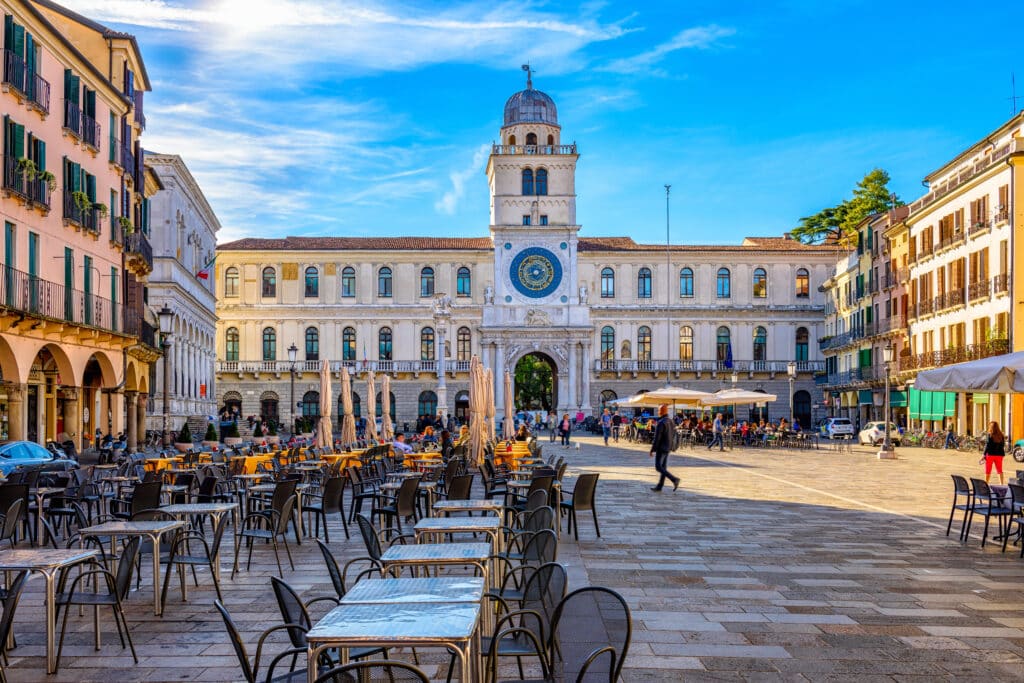
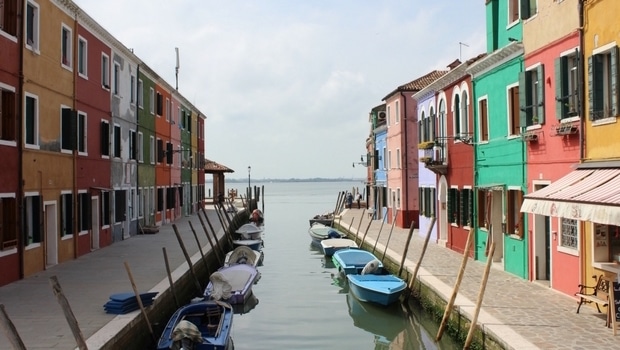
Italy is like an outdoor museum, steeped in ancient history and customs. The food and weather are excellent. One would think moving to Italy or Bel Paese (“Beautiful Place”) would be la dolce vita (“living the sweet life”). However, my perspective of the country changed after living there for six months, teaching American Sign Language (ASL) and American Deaf Culture, and working on other project initiatives in the Veneto region.
Italy is a developed, first-world nation, but services for the deaf are lacking, and there is widespread discrimination against this community. It is the last major Western European country (other than the tiny state of Luxembourg) to recognize Italian Sign Language or Lingua dei Segni Italiana (LIS). Many of the support services and education for the deaf I took for granted in the U.S. are sorely lacking or underdeveloped in Italy.
Oddly, while deaf accessibility is lacking, Italy does have some concessions for the deaf and individuals with disabilities unheard of in the U.S. During my free time, I traveled to other regions of Italy for sightseeing and museum visits, which are free for visitors with disabilities and their escorts regardless of nationality. Since I am deaf, I was able to cut long lines to obtain free tickets. It’s incredible that I rarely paid a single cent for museums and sightseeing.
While free admission to museums is nice, there are no sign language interpreters, captioned videos, or transcripts of audio guides in most cases. I would rather pay full price and receive the full gamut of services and accommodations for the deaf.
Despite all the challenges and changing expectations of living in Italy as a deaf person, one of the best parts of living here was connecting with the deaf Italian community and my students. I learned as much from them as they have learned from me.
They helped answer my questions about Italy and its culture and language. For example, LIS is not uniform across Italy; every region has its own “dialect.” I had to learn and use two languages every day: Italian and LIS. Once a week, an Italian-English-LIS interpreter would visit my home to give me free, weekly private lessons in written and spoken Italian. In exchange, I would teach her ASL since she wasn’t able to come to my class. At this point, I can give one- to two-hour presentations in written Italian and LIS!
In addition to teaching ASL and American Deaf culture, I gave a seminar at the Ente Nazionale Sordi – Padua branch (ENS Padua) about the deaf population living in the U.S. ENS Padua is a Deaf club based in Padua where members of the deaf community gather to socialize and work on issues concerning their local region. I talked about accessibility, education, and other facets of deaf-American lives. I plan to give more seminars like this outside of the Veneto region to educate and share my knowledge and experience of deaf Americans with Italians.
To me, cross-cultural understanding and exchange means taking the time and effort to learn about other cultures while teaching others about your own. I have learned so much from my time here in Italy, but I still have a long way to go to understand the country truly. I see myself as part of the global Deaf community. It is our nature to seek out and connect despite differences in language, culture, and customs. We all have a strong inherent need for communication because gainful and total communication has been denied to us many times growing up, and prejudices and misconceptions about us are common.
I recently won the U.S-Italy Fulbright Deafness Studies Award for the upcoming year (2016 – 2017), so I will stay in Italy! I will continue to teach ASL at Ca’Foscari University while working on my research project on deaf Italian entrepreneurs. The Christianson Fellowship allowed me to jump-start my international career and lay the foundation for my future work with the Deaf community in Italy. For that, I am truly grateful.