Next up in our blog series about American Fads are Silly Bandz! Though first sold online in 2008, these funky rubber bands hit the U.S. market by storm in 2010 and became the biggest craze of the year. Children across the country were swept away by these colorful, shape shifting bracelets and retailers could not restock shelves fast enough for swarms of eager customers.
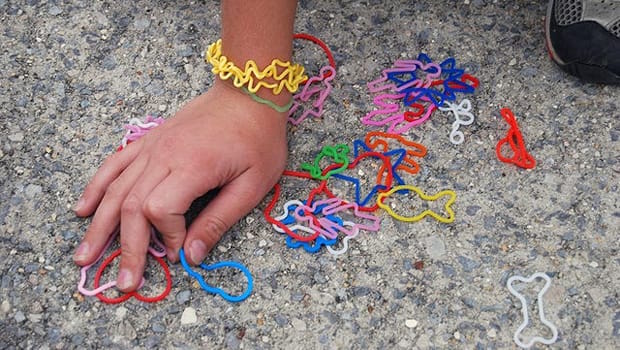
Image courtesy of Melissa Shelton
Silly Bandz are the product of BCP Imports LLC, a small company in Toledo, Ohio. However, the idea for creating these bracelets was inspired by a Japanese designer who invented shaped rubber bands as a way to stop people from throwing them away so quickly and to create a more sustainable product. Robert Croak, president of BCP Imports, took this idea one step further with Silly Bandz. Creating a variety of bracelets in a plethora of colors and shapes, Croak and his three-person design team launched a phenomenon within the toy industry. When these bracelets hit stores in 2010 they were a veritable success and sparked BCP Imports to grow from a company with only 20 employees in 2008, to one with nearly 3,000 staff members in the U.S. and China only two years later. In annual sales, the company grew from making $10,000 a year, to over $100 million.
Although Silly Bandz are simply multi-colored silicone bracelets that come in a variety of designs, American children were instantly hooked. Kids began wearing them on their wrists and trading them with their friends. Silly Bandz were simple and affordable, with sets of 12 priced at just $2.50 and 24-packs sold for $5.00, which pleased American parents. Unlike iPods and other electronic games, Silly Bandz bracelets are low-tech and easily accessible for all budgets. Kids were attracted to the different shapes they could collect, with packs coming in themes such as dinosaurs, princess, baseball, and rainforest. With their instant popularity among American youth, many stores were having trouble keeping up with the demand. An array of imitator brands also emerged, such as Zanybandz and Crazy Bandz to name a few.
Before long, Silly Bandz were becoming so popular that they began causing problems in schools, and districts across the country began banning these bracelets. In states such as New York, Texas, Florida and Massachusetts, educators were finding that children’s obsession with Silly Bandz was distracting them from their studies and inciting disputes between peers. In addition to schools, some health professionals began to speak out about possible health problems Silly Bandz may cause. Since some children were wearing so many bracelets up their arms, some over 100 Bandz at once, there was a growing concern that they would cut off blood circulation.
After about six months of the Silly Bandz fad, the craze began to die down. Packs of bracelets that had been previously flying off store shelves stopped selling and storeowners were forced to offer two-for-one deals in order to get rid of the surplus. As with other toy fads, such as the hula-hoop, Silly Bandz mania was short lived. However, although American children are no longer interested in collecting Silly Bandz, they are easily recycled and reused for their original purpose, as rubber bands.
Sources:
- http://www.time.com/time/nation/article/0,8599,1991797,00.html
- http://donnawallace.hubpages.com/hub/5-Things-You-Didnt-Know-About-Silly-Bandz-bracelets
- http://voices.yahoo.com/silly-bandz-bracelets-history-popularity-6642952.html?cat=24
- http://www.huffingtonpost.com/2010/05/24/silly-bandz-bracelets-ins_n_586762.html
- http://www.usatoday.com/money/industries/retail/2010-12-17-sillybandz17_ST_N.htm?%20%20loc=interstitialskip
- http://www.dailyfinance.com/2010/12/17/snap-silly-bandz-death-creates-alternative-uses/