Updated: July 9, 2025
“First in war, first in peace, and first in the hearts of his countrymen”
– Memorial Service for President George Washington, December 26, 1799The Ultimate Career Pivot: From Surveyor to Revolutionary
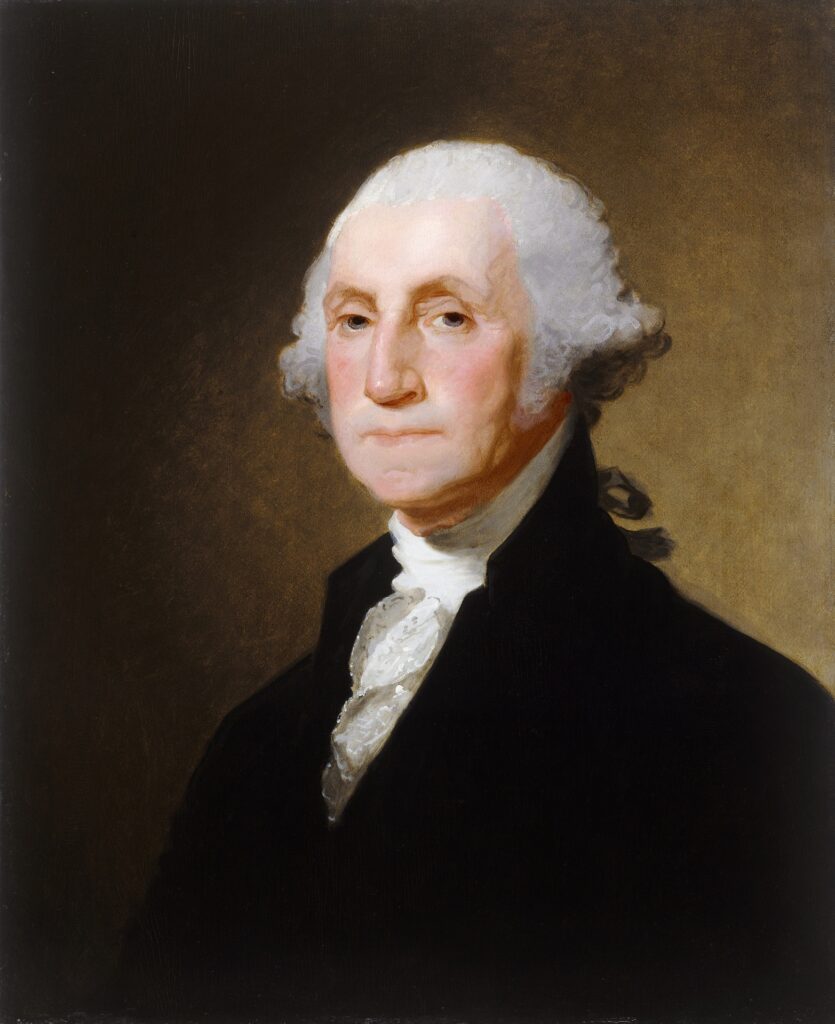
George Washington, Commander-in-Chief of the Continental Army and 1st President of the United States, pulled off perhaps history’s most dramatic career change. Imagine starting as a land surveyor and ending up as the founder of a nation – it’s like going from measuring property lines to drawing the boundaries of democracy itself!
The General Who Said “No Thanks” to Being King
Washington is often called the father of the United States for good reason. He served as Commander-in-Chief during the American Revolutionary War and led the fight for independence from Great Britain, achieving victory in 1783. But here’s what makes Washington truly exceptional: when some wanted to make him king, he refused. Instead, he helped create something entirely new.
After the war, Washington helped lay the foundation for the U.S. government as we know it today. He presided over the 1787 writing of the U.S. Constitution and then won unanimous support from the Electoral College to become the first President in 1789. Washington championed practical ideas like establishing a national bank, creating a system to pay off war debts, and building an effective tax system. He hoped these would keep the newly independent country united and promote national identity. He also warned against excessive partisanship – advice that remains relevant today, though political parties did form after he left office.
A President Without a White House
Washington’s presidency was full of firsts, including some quirky geographical challenges. He was inaugurated in New York City and governed from Philadelphia – the area we now call Washington, D.C. didn’t become the capital until July 1790. Ironically, Washington is the only president who never got to live in the White House, since it wasn’t built during his time in office. He did, however, help choose the location for the permanent capital, which would eventually bear his name. Today, you can visit his beloved Mount Vernon estate in Virginia, just outside the D.C. area.
From Young Soldier to Elder Statesman
Born February 22, 1732, Washington lived through some of America’s most pivotal moments before dying on December 14, 1799 at age 67. Picture this timeline: he started as a young soldier in the French and Indian War, became a lieutenant colonel by age 22, then spent eight grueling years (1775-1783) leading the fight for independence. On April 30, 1789, he took the oath as America’s first president – quite literally making up the job as he went along. After serving two terms, he voluntarily stepped down (setting a precedent that lasted until FDR) and returned to his Virginia plantation, where he enjoyed less than three years of retirement before his death from a throat infection.
The Cincinnati of America
Why is Washington such a big deal? Like the Roman leader Cincinnatus, who famously gave up absolute power to return to his farm, Washington shocked the world by voluntarily stepping down. King George III reportedly said that if Washington gave up power willingly, “he will be the greatest man in the world.” And he was right – Washington’s face graces every dollar bill because he chose democracy over dictatorship, setting the standard for peaceful transitions of power that democracies worldwide still follow today.
Fun Facts That Make Washington Human
- The nation’s capital, one state, 31 counties and 17 cities are named in Washington’s honor – talk about a lasting legacy!
- Those famous “wooden teeth”? Actually made of ivory and real human teeth. As the ivory aged and stained, it looked like wood grain – hence the myth.
- Washington never attended college, getting his education from his older half-brother Lawrence instead.
- He married Martha Dandridge Custis, a widow, in 1759. While they never had biological children together, Washington raised Martha’s two children from her first marriage like his own.
- Washington was such an ice cream fanatic that he had special ice cream coolers installed in his house – the 18th-century equivalent of having a premium freezer!
- At his death, more than 300 enslaved people lived and worked at Mount Vernon, reflecting the complex contradictions of even our most revered historical figures.
Washington’s story reminds us that true leadership sometimes means knowing when to step aside – a lesson as relevant today as it was over 200 years ago.
Sources: