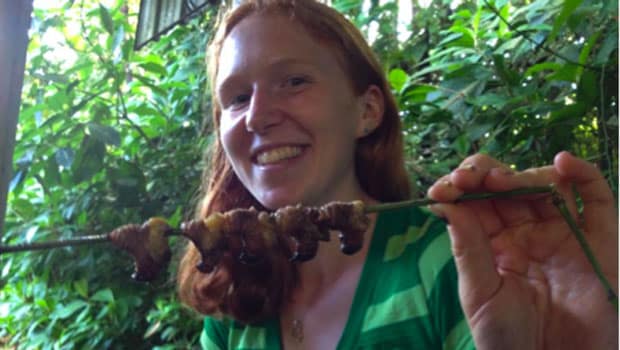
Becky eating chontaduro, a typical Amazonian dish. Photo courtesy of Becky.
I have already learned so much in the time that I have been here. In the first English classes, students discussed the meaning of respect, why they are interested in learning English, and they set goals for the year. My students all live in the Amazon region of Ecuador, which provides me with the unique opportunity to combine my conservation background with English education. To show students the usefulness of English, and to give them more real-world practice, I’ve connected them with pen-pals. Some will be talking with English students from China, Greece, and Russia.
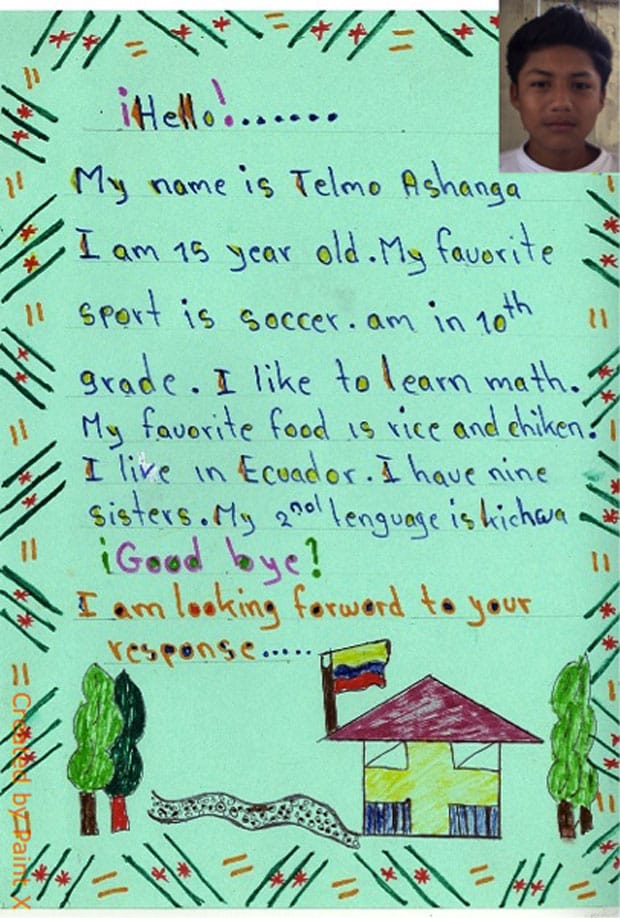
Telmo’s first letter to his pen-pal in Russia. Photo courtesy of Becky.
To brainstorm for our letters, I wrote a sample letter and we discussed what foods grow in other parts of the world. They know that Ecuador is one of the world’s main exporters of bananas, coffee, and chocolate. What they didn’t know was that without Ecuador, most people in the world couldn’t eat bananas everyday. Most of my students come from families that farm cattle or sugar cane for a living. They grow plantains, yuca, potatoes, onions, and many basic foods in gardens at their school and homes. It was surprising for my students to learn that in New York, crops only grow for part of the year, and most people don’t go through the trouble of growing their own food. When I tell my students that my family in New York doesn’t grow plantains, yuca, and almost never eats rice with a meal, they are always surprised, as rice is a staple of breakfast, lunch and dinner in Ecuador. I have learned and seen first-hand the year-round productivity in this part of the world, and have a greater appreciation for it.
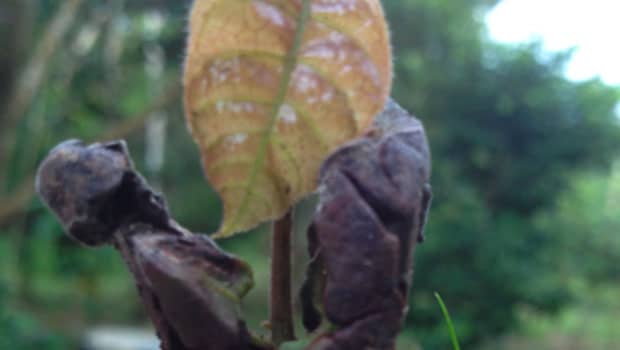
A small cacao plant. Photo courtesy of Becky.
by Rebecca