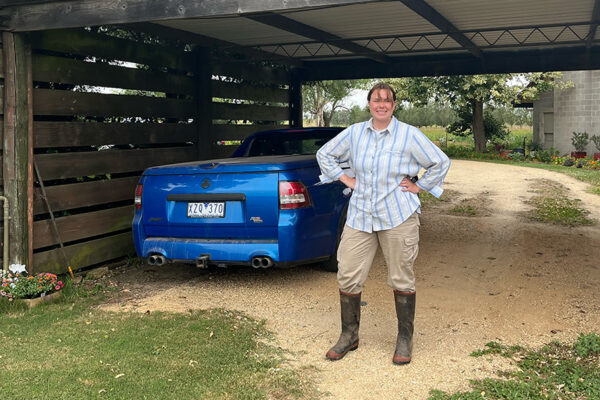
After a transformative year living and working across Australia, Indiana native Savannah has plenty of advice to share with anyone considering their own Work & Travel Australia adventure. Her journey, which took her through competitive job markets, relative isolation, and some unexpected adventures, has equipped her with unique insights that could prove invaluable to future program participants..
“I would say just do it,” Savannah reflects on her experience. “I’m always going to be that person in your corner that’s like, ‘Do it.’ But you need to be prepared.”
That preparation, as Savannah learned through trial and error, can make an enormous difference in your experience. Having navigated the program’s challenges while building meaningful experiences, Savannah offers her sage advice on everything from pre-departure planning to navigating the competitive job market, smart budgeting strategies, and successful cultural adaptation.
Financial Preparation
One requirement of the Working Holiday Visa is having access to the financial resources to get settled in, as well as sufficient funds to guarantee your onward travel at the end of your program. For those who have the means, Savannah recommends a little extra padding. “I know with the visa they say to have $6,000 worth of Australian dollars in your savings. I pretty much brought that with me,” Savannah explains, noting that only about $500 remained by the time she found her first long-term job.
The initial period in Australia often involves significant expenses with limited income, particularly during slower hiring seasons. “When I first arrived right after New Year’s, I struggled to find a job because January through February is a slow hiring period. So, I had to use my savings for a while,” she recalls.
Smart Packing Tips
One of the most crucial elements of preparing for an extended stay abroad is knowing what to pack… and what to leave at home. Savannah found that the 50 pounds of luggage with which she arrived had dwindled to a lean 35 as she Marie Kondo-ed her way across the continent. Her ultimate advice: less is more.
Clothing Essentials and Mistakes to Avoid
Arriving in Sydney at the height of the Australian summer, Savannah was immediately astounded by the heat and humidity for which she thought she was prepared. “Do not bring jeans,” she advises. “Australia is hot, humid, and sticky, especially in summer. Opt for linen, dresses, and breathable clothes instead.”
In fact, Savannah recommends not weighing yourself down with a lot of clothing in general. “You’ll end up buying more once you’re there. Kmart, Ghanda, and Cotton On have affordable, cute, and good-quality basics. Since you’re backpacking, aim for versatile clothing that can mix and match for multiple outfits.”
That mentality of traveling light is echoed in Savannah’s guidance surrounding footwear. “I brought work shoes, sandals, tennis shoes, and hiking shoes,” she explains, “and by the end I literally just had my hiking shoes and my sandals.”
Essential Multi-Purpose Items
So what should you pack? Savannah lists a few essential items that allow for maximizing versatility while minimizing weight throughout the journey:
- Microfiber towel: “Essential for quick drying, especially if you’ll be moving around a lot”
- Packable rain jacket or poncho: “You won’t need it often, but when you do, you’ll be glad you have it. Make sure it’s waterproof, not just water-resistant.”
- Packing cubes: “Absolute game-changer for keeping your bag organized”
- Multiple small bags: “I used a fanny pack, a small packable purse, a compact backpack, and a tote bag. They all fit into each other and came in handy at different times.”

Pre-Departure Mental Preparation
Even with pre-departure planning and support calls with InterExchange staff, Savannah mentions fear as the reason that she arrived in Australia without having done additional research on her own. Based on her own experience, it’s not a method she recommends for those following in her footsteps. “I would say for future me to not do that because I had to learn some things the harder way than just like typing stuff on Google and reading some articles and watching YouTubes about those experiences.”
Luckily, everything worked out, but she does advise future participants to do basic research on essential topics like Australia’s climate and geography, the job market and hiring seasons, visa requirements and obligations, and the services and resources available to Working Holiday Makers.
For those looking for support to begin research, InterExchange has friendly, knowledgeable staff both before you go, (and 24/7 while you’re in Australia!), ready to point you in the right direction and answer all your questions along the way.
First Steps Upon Arrival in Australia
As with any long-term stay abroad, the first few weeks in Australia can set the tone for your entire experience. Savannah shares some of her tips for getting your feet off the ground.
Communication Setup
“When you get to Australia, you’ll definitely want to get an Australian SIM card,” she says. “I used Telstra, which has the best coverage, especially if you plan on traveling outside the cities. Keep your U.S. SIM card, though—you can turn it on when needed.”
One piece of advice that Savannah stresses? Be sure your multi-factor authentication methods are not dependent on your U.S. phone number. “If you are planning to stay in Australia for more than a few months, you will likely get an Australian number and a new mobile plan. Before making the switch, make sure to review two-factor authentication settings on all your devices, emails, bank accounts, and websites.”
For staying in touch with home, Savannah recommends utilizing universally-common apps like WhatsApp, Instagram, and Facebook Messenger, which work well internationally using WiFi or using your Australian SIM’s data.
Initial Accommodation Strategy
Your first housing choice can have substantial impacts on your budget and social opportunities during the early adjustment period. Beyond mere accommodation, hostels offer advantages like centralized locations, baked-in social networks, and even organized excursions for guests.
“For most of my time in Australia, I hostel-hopped, which is a great option because you can often work in hostels for 10–15 hours per week in exchange for free accommodation,” Savannah explains. “It’s super social, and you’ll meet a lot of people, especially when you first arrive.”
Mastering the Job Hunt
The Australian job market for Working Holiday Makers can be competitive and seasonal, requiring both persistence and strategic planning. Arriving during the post-holiday economic slowdown, Savannah discovered that securing employment was a bit more difficult than she’d anticipated. Her successful job search ultimately relied on multiple platforms and approaches, such as Facebook Working Holiday group chats, the Backpacker Job Board, and the conventional approach of pounding the pavement with a handful of resumes.
Following a brief time at the Sydney’s Easter Show, Savannah ultimately found the job that would truly shape her experience Down Under—at a remote cattle ranch in the Northern Territory. Despite the more limited access to the cultural amenities like those available in Australia’s cities, working in the Outback proved to have its own distinct advantages.
“Outback jobs are great for saving money because there’s nothing to spend it on when you’re in the middle of nowhere,” Savannah notes. Her rural work enabled substantial savings: “When I worked in the outback, I was able to save over $10,000 AUD, which funded four months of travel—two months in Australia and two months in Southeast Asia.”
Budget-Smart Living
Effective money management can dramatically extend your time in Australia and expand your travel opportunities.
Grocery Shopping and Meal Preparation
Food costs represent one of the largest controllable expenses for Working Holiday participants.
“My first month in Australia, I was really nervous about using the hostel kitchen, so I never used it. I was spending a lot of money eating out all the time,” Savannah admits. Once she got more comfortable preparing her own meals, however, she found her food expenses dropped significantly—to about $50-100 AUD per week—which compared favorably to restaurant costs while providing better nutrition and flexibility.
Entertainment and Social Life on a Budget
Australia offers numerous free and low-cost entertainment options, particularly for those willing to explore beyond tourist attractions.
“A lot of stuff is free. In Sydney and Australia, a lot of people just go to the beach or go to a park,” Savannah observes. “If you’re in hostels, they always have like free events and hikes and those types of things as well.”

Smart Shopping for Essentials
Understanding which retailers offer the best value is another great way to stretch budgets. This knowledge typically comes from other travelers and locals rather than tourist guides.
“Kmart is amazing. Super cheap prices. I would buy really cute tops for five Australian dollars, 10 Australian dollars, which is like nothing,” Savannah discovered. “Cotton On is amazing. If you want coastal beach wear, Ghanda is your best friend.”
As for second-hand shopping: “If you’re a thrift person, Vinnies is great.”
Easy Travel and Friendly Locals
Traveling around Australia is surprisingly easy. “Whether you want to travel solo or find other travel companions to go on adventures with, it is very accessible to do both.” The country offers excellent public transportation within cities, and there are affordable options for intercity travel, including buses, trains, and air travel.
One of the most heartwarming aspects of Australia is the hospitality of its people. As Savannah recounts, “Whether I found myself lost, in need of directions, or simply wanted a photo that wasn’t a selfie, there was always an Australian ready to lend a hand.”
Cultural Navigation and Social Integration
Successfully integrating into Australian culture—whether with locals or the international backpacker community—requires understanding social norms and communication styles.
Australian Communication and Slang
“Australians have thicker accents and use unfamiliar slang that—even I as a native English speaker—have some difficulty understanding,” Savannah notes.
Indeed, clever word play is as common as Vegemite in Aussie culture. Rather than trying to adopt Australian slang, Savannah recommends learning to understand it while using clear, standard English in your own communication.

Meeting People and Building Community
“Making friends here in Australia, either in person or online, is incredibly easy. Facebook, HostelWorld, and WhatsApp are just a few online platforms I have used to find friends and events going around in my area.”
The social dynamics, however, can differ between urban and rural environments:
“If you’re starting in Sydney or Melbourne, you’ll mostly meet other backpackers, especially if you’re staying in hostels. It’s super social, but most people you meet won’t be Australian,” Savannah explains. “The time I made the most Australian friends—and the ones I still talk to—was during my job in the Outback. Living and working with mostly Australians made it much easier to integrate into their community.”
Embracing Uncertainty and Opportunity
“When I came to Australia, I literally just wrote down ‘I’m just open for new experiences.’ And I felt like the whole time I was in Australia, I was not really saying no to anything. I was being like, ‘Sure, why not?’ And I somehow did a lot of interesting things with having that mindset.”
This openness led to unexpected opportunities like joining a surf camp, joining an impromptu road trip, and even learning to milk cows on a dairy farm.
“A lot of people in my life tell me, ‘Oh, you can’t do it. You can’t do that alone,’” Savannah says. “I always tell myself, ‘If I don’t do it, will I regret it later?’ I don’t want to live life with regrets, so I just do it.”
Ultimately, Savannah’s year in Australia was successful, not because everything went according to plan, but because she had the determination to embrace unexpected opportunities and challenges. For those unsure if they’re ready to take the leap, Savannah’s experience shows that proper preparation and an open mindset create the foundation for success, even when the path unfolds differently than initially imagined.
“If you are flexible and persistent, you’ll find something!” she assures future applicants.
For those preparing for their own Australian adventure, Savannah’s firsthand wisdom offers a roadmap to maximize the chances of success—however that success ultimately defines itself.
Embarking on a Working Holiday in Australia is an exciting journey of self-discovery, cultural immersion, and adventure. As you navigate this new chapter, remember to stay open to new experiences, embrace the challenges, and make the most of every opportunity. Your Australian adventure awaits!