2019 Christianson Fellow Cheyenne Polk volunteers with Development Initiative Network (DIN Malawi), an organization which partners with female empowerment groups, small business programs, youth clubs, and HIV support groups to improve their lives.
On January 10, 2020 DIN Malawi had an amazing event to open our tailoring and gardening projects, which will provide economic and health benefits to communities affected by HIV in the town of Chikwawa.
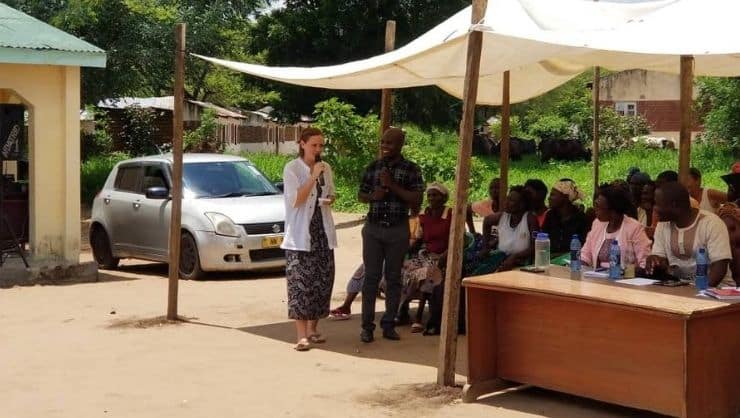
Image courtesy of Cheyenne Polk
About 100 of the HIV support group members came to listen to speakers from the Chikwawa government, DIN Malawi staff, and myself speak about the projects. Each of these stakeholders discussed the sustainable impact these projects will have on the community. I was lucky to have some of my expatriate friends who live in Blantyre (a city in southern Malawi) present; we danced together to celebrate the initiation of the projects.
Before starting the tailor-training project, we surveyed the participants to measure their current level of income and nutrition status. It was shocking to hear how little each person earns in the Chikwawa district: 1,346 kwacha per day (about $1.80 USD)—lower than the minimum wage of Malawi.
Such low income negatively impacts their nutrition because they’re not able to purchase foods from all food groups. The six food groups in Malawi include: fruits, vegetables, grains, legumes, oils, and meat. Dairy is not listed as it is in the United States because it’s not widely available in rural Malawi.
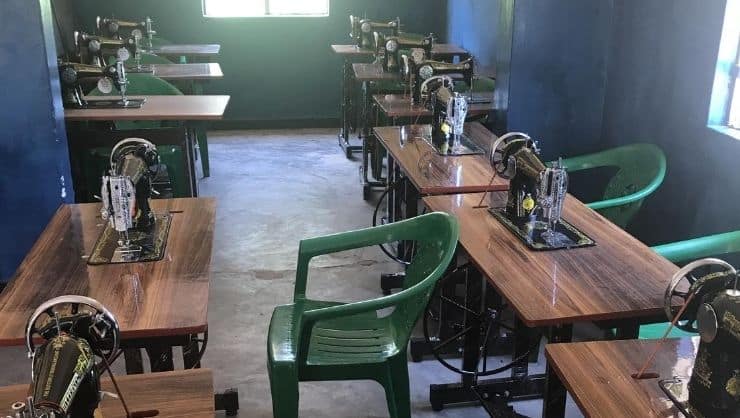
Image courtesy of Cheyenne Polk
Women reported that they only consume about four of the six food groups daily and only supplement these groups when they had the additional income or when conditions were favorable. For example, many women don’t consume fruit until mango season (September to January) because mangoes are very plentiful and cheap. Other fruits are much more expensive.
Participants reported having around 20,000 kwacha ($27.12) of income per month before expenses, often noting that this income is unstable because it comes from random jobs. All 12 participants were eager to start the tailor training project so they could learn new skills and find reliable work with a steady source of income.
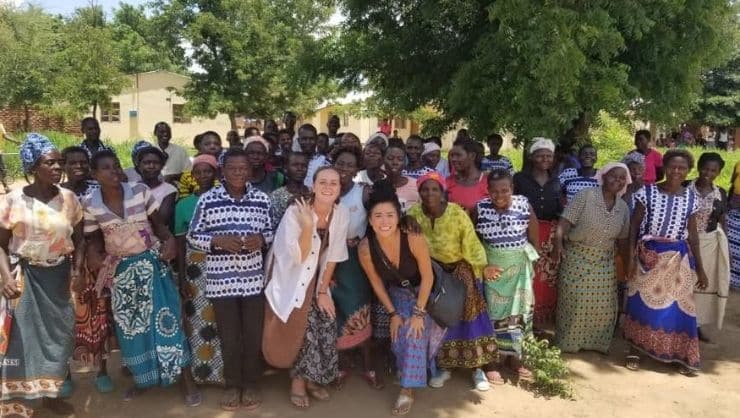
Image courtesy of Cheyenne Polk
I’m ecstatic to be managing this endeavor with DIN Malawi and feel grateful to be in the company of so many amazing people while developing fun, grassroots projects.